How to Pack One Bag for Travel

Can your your life really fit in a carry-on?
The night before a trip, most people’s beds look the same. A bag sits open at one end, and around it grow small piles of maybes. A third pair of jeans, the jacket for weather that probably won’t happen, the shoes that match one specific outfit. Everything on the bed feels reasonable. Together, it weighs thirty pounds.
Packing one bag flips that process. Instead of starting with everything you might want and trimming down, you start with a fixed amount of space and decide what earns a spot inside it. That sounds harder, and the first time it is. But it turns packing from a night of small anxious decisions into a system you can run in twenty minutes.
This guide is that system. Packing one bag is not about bringing less of everything. It is about bringing exactly enough of the right things.
In this guide
- Start with the bag, not the stuff
- The clothing formula
- Toiletries that clear security
- Tech without the drawer of cables
- How to physically pack it
- A complete sample packing list
- What one bag costs you
- Pack, travel, adjust
Start with the bag, not the stuff
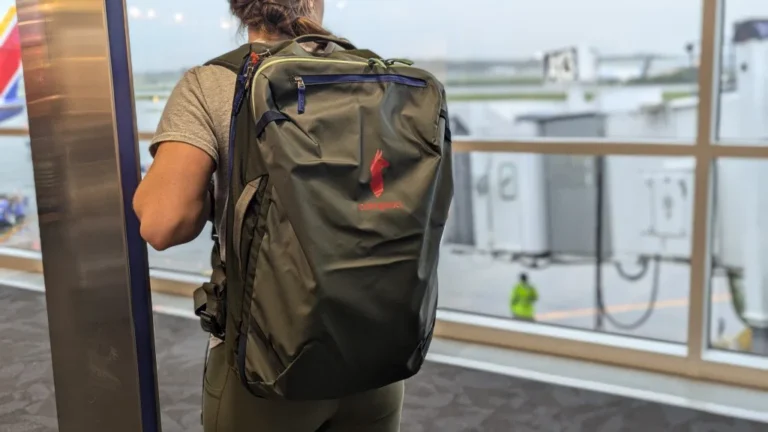
The bag is your hard limit, so choose it before you think about anything that goes inside. For most travelers the sweet spot is 30 to 40 liters (Lately I have been running the 35L Cotopaxi Allpa). This range holds a week or two of clothing plus a laptop setup, and it stays within the carry-on rules of most major airlines. Go bigger and you will fill the space because it exists. Go much smaller and every packing day becomes a puzzle and can take away from the experience more than it enriches it.
Airline sizing matters more than most brands admit, and “carry-on compatible” on a product page is not a guarantee. Check your usual airlines against our airline dimension tables before you buy, especially if you fly budget carriers that enforce limits at the gate.
Beyond size, the main decision is structure. Some bags open flat like a suitcase and organize everything into compartments, the way the Cotopaxi Allpa 35L does. Others give you one open cavity and let you build your own system with packing cubes. Neither is wrong. Structured bags suit people who want the bag to do the organizing. Open bags suit people who want flexibility and less weight. You might find a mix of the two is the perfect system for you. Decide which packer you are, honestly, and buy for that. If you want a deeper filter before you purchase, our guide to choosing a one bag travel backpack covers size, openings, and carry.
The clothing formula
Here is the single biggest mental shift: you pack for one week, no matter how long the trip is. A weekend, a month, a year, the clothing list barely changes. Laundry is what extends it, the same logic behind packing carry on luggage for 2 weeks. Once you accept that you will wash clothes every five to seven days, the pile on the bed shrinks dramatically.
How much to bring
A reliable starting point for a temperate climate looks like this:
- 4 to 5 tops that all work with everything else
- 2 bottoms, typically one pair of pants and one of shorts or a second pair of pants
- 5 pairs of underwear and 5 pairs of socks
- 1 warm mid layer, like a light merino sweater or fleece
- 1 packable rain shell
- Something to sleep in and one swimsuit if the trip calls for it
Count it up and you are wearing one full outfit, which means the bag only carries the rest. The exact numbers matter less than the rule behind them: every piece has to work with every other piece. Stick to two or three neutral colors and the whole bag becomes one interchangeable wardrobe instead of a set of specific outfits. Try to stay away from graphic tees and flashy pieces; you’ll get sick of them pretty quick.
Fabrics do the heavy lifting
With this few pieces, fabric choice matters more than brand. Merino wool tops resist odor well enough to wear several times between washes and they regulate temperature in both directions. Quick-dry synthetics wash in a sink at night and are dry by morning. Cotton is comfortable but slow to dry and quick to smell, so it earns fewer spots in the bag. You do not need to replace your entire wardrobe with technical clothing, but the pieces you repeat most often, socks, underwear, and the shirts you wear weekly, benefit the most from an upgrade.
The laundry rhythm
Laundry stops being an event and becomes a habit. A laundromat or a machine at your accommodation handles the weekly wash, and a sink handles small emergencies in between. A travel-sized bottle of concentrated detergent or a strip of laundry sheets covers both. Plan your washing day loosely before a trip and the one-week wardrobe never feels tight.
Toiletries that clear security
Liquids are where carry-on packing gets bureaucratic. Most security regimes still limit you to containers of 100 ml or less, all fitting in one small clear bag. The easiest way to win that game is to stop playing it: solid toiletries have no liquid limit. A shampoo bar, a bar of soap, a solid deodorant, and toothpaste tablets replace four bottles and last longer than their liquid versions.
For whatever remains liquid, decant into small refillable bottles rather than buying travel sizes of everything. And remember that almost anywhere you land has pharmacies. Pack for the first week, not the whole trip, and buy the rest where you are. Sunscreen, razors, and shampoo exist worldwide, and buying locally is often cheaper than carrying a month of supplies through airports.
The whole kit should fit in a pouch smaller than a paperback. If it does not, something inside it is a full-size product pretending to be essential.
Tech without the drawer of cables
Tech creep is quiet. No single item is heavy, but the second charger, the backup battery, the just-in-case HDMI cable, and the tablet you will not open add up to a bag inside your bag. The fix is to standardize. If every device you carry charges over USB-C, then one compact multi-port charger and two cables cover the laptop, the phone, the earbuds, and the e-reader.
A reasonable full kit for a working traveler: laptop, phone, one multi-port wall charger, two USB-C cables, earbuds, a universal plug adapter if you are crossing regions, and a small power bank if your days run long. All of it lives in one pouch, and the pouch has a permanent home in the bag so you always know where it is and whether anything is missing.
For every other gadget, apply one test: will I use this weekly? A drone you fly twice is a kilogram of regret. If the honest answer is no, it stays home.
A personal example: I was determined to bring a second monitor. When I first began to consider traveling full-time, specifically out of one bag, I felt that transitioning from primarily using a desktop with multiple monitors to a
How to physically pack it
Once the pile is right, how you load it determines whether the bag feels organized for the whole trip or turns into a jumble by day three.

Use packing cubes, and give each one a job
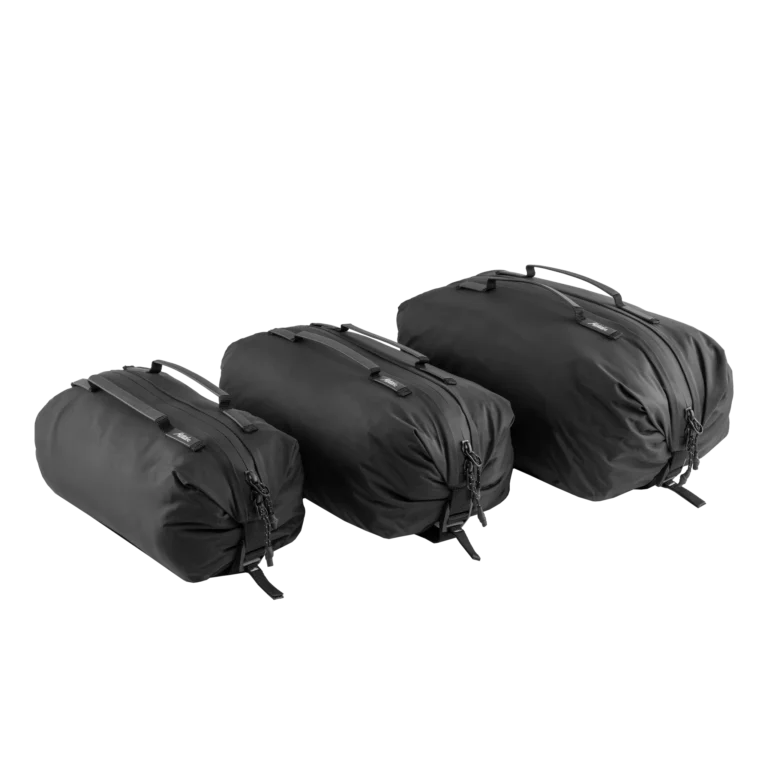
Packing cubes are the difference between unpacking a bag and excavating one. Use two or three: one for main clothing, one for underwear and socks, and one for the miscellaneous category that every trip produces. The system only works if each cube keeps a single job for the whole trip. We covered a durable, weather-resistant option in our review of the Matador Gear Cube Set, which handles shoes and damp clothes better than standard mesh cubes.
Roll most things, fold a few
Rolling wins for t-shirts, underwear, and anything knit, because rolls pack tighter and show you everything in a cube at a glance. Folding is better for structured shirts and anything that creases badly. The honest truth is that the difference in saved space is smaller than the internet suggests. Cubes and discipline about quantity matter far more than technique.
Weight placement and empty space
Put the heaviest items, usually the laptop and the toiletry kit, closest to your back and centered between your shoulder blades. The bag will carry noticeably better. Then resist the urge to fill every last pocket. Leaving roughly ten percent of the bag empty gives you room for groceries, a souvenir, or a jacket shoved in quickly at a security line. A bag packed to bursting is a bag you fight with daily.
A complete sample packing list
Here is the full contents of a one-bag setup for one to two weeks in a temperate climate, assuming you wear one full outfit while traveling. Treat it as a starting template and adjust for your own climate and work needs.
| Category | Items |
|---|---|
| Clothing (packed) | 4 tops, 1 spare bottom, 5 underwear, 5 pairs socks, 1 merino mid layer, 1 rain shell, sleepwear, swimsuit |
| Clothing (worn) | 1 top, 1 bottom, underwear, socks, shoes, belt |
| Second shoes (optional) | One packable pair only if it earns the space, something like the Bedrock Mountain Clog or, in hotter itineraries, the Luna Mono Winged |
| Toiletries | Shampoo bar, soap bar, solid deodorant, toothbrush, toothpaste tabs, razor, nail clippers, any medications, small sunscreen |
| Tech | Laptop, phone, multi-port USB-C charger, 2 cables, earbuds, plug adapter, small power bank |
| Organization | 2 to 3 packing cubes, 1 tech pouch, 1 toiletry pouch, 1 flat document pouch |
| Documents | Passport, one backup card stored separately from your wallet, paper copies of key reservations |
| Extras | Collapsible water bottle, travel towel, sink laundry detergent, a few zip bags, small first-aid kit |
Everything on that list fits comfortably in a 35-liter bag with room to spare. Most people who try it discover the hard part was never fitting it in. It was believing the list could really be that short. For a fuller item-by-item breakdown of the same kit, see our one bag travel packing list.
What one bag costs you
It would be dishonest to pretend this is free. Packing one bag means laundry is a recurring chore, not an occasional one. It means wearing the same handful of outfits in every photo from the trip. Cold-weather destinations are genuinely harder, because insulation is bulky and a one-week wardrobe for winter takes real planning. Formal events are awkward with a capsule wardrobe, and hobbies that need equipment may have to stay home.
Some people also simply feel better with options, and there is nothing wrong with that. The goal is not to win a minimalism contest. It is to make travel feel lighter, and if a slightly bigger bag with a few comforts does that for you, that is the right bag. For a deeper look at what the lifestyle actually feels like day to day, including the parts that are not freeing, read our essay on living out of one bag.
Pack, travel, adjust
No packing list survives its first trip intact, and that is the point. When you get home, unpack and sort everything into two piles: things you used and things you carried. The second pile is next trip’s weight savings. Most people find their list gets shorter for two or three trips and then stabilizes into something they can pack from memory.
That is the real destination here. Not a perfectly optimized bag, but a packing routine so familiar that the night before a trip stops being a project. The bed stays clear, the bag takes twenty minutes, and the only question left is where you are going.
There's more where that came from...